Garage Cleanout Dumpster Sizing: How to Estimate Volume Before You Order
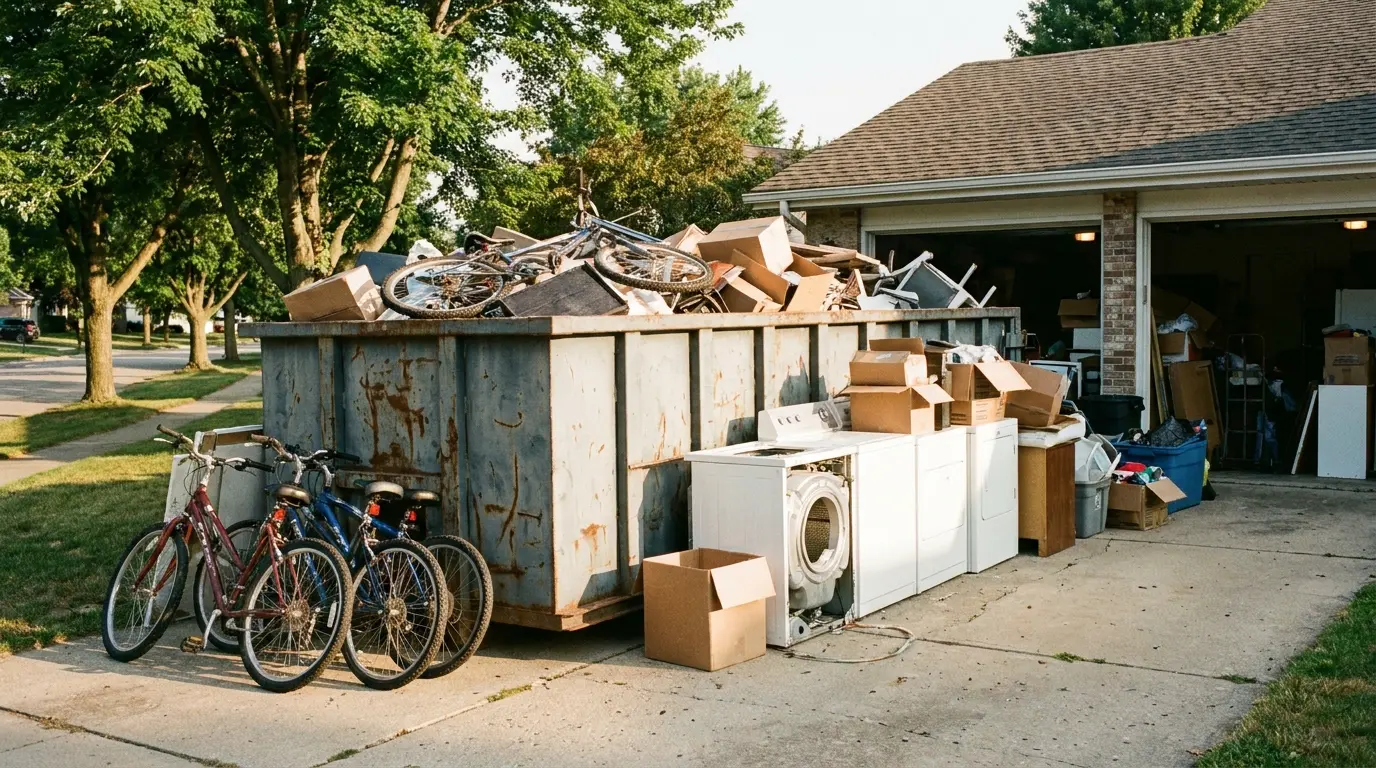
Why Garage Cleanout Dumpster Sizing Matters for Your Wallet and Schedule
A garage cleanout can fill a 10-yard dumpster fast. But if you guess wrong, you might end up with a 20-yard container half empty or a 10-yard overflow that requires a second pickup. Both scenarios cost you extra.
Landfill tipping fees vary by region – from $20 per ton in parts of the West to over $100 per ton in the Northeast. That weight directly affects your final bill. Also, many cities require a permit if the dumpster sits on a public street. For example, in Chicago, a street permit runs about $50 per day. Knowing your volume ahead of time lets you pick the cheapest container that fits the job and the local rules.
How to Estimate Garage Cleanout Volume in Cubic Yards
Dumpster sizes are measured in cubic yards. A 10-yard container holds about 10 cubic yards of material – roughly the volume of a small car. To estimate your garage’s debris, measure the space you plan to clear. If the garage is 20 feet by 20 feet with 8-foot ceilings, that’s 3,200 cubic feet. Divide by 27 to get cubic yards: about 119 cubic yards. But you won’t fill the whole garage – you’re removing items, not air. A typical two-car garage cleanout produces 10 to 15 cubic yards of mixed junk.
A good rule of thumb: one pickup truck load equals about 2 cubic yards. If you think you have 5 truckloads, you need a 10-yard dumpster.
Common garage items and their volume – A standard sofa takes up about 3 cubic yards. A full-size refrigerator is 1 cubic yard. Boxes of clothes and books stack tightly, so 20 medium boxes fill roughly 1 cubic yard. Old lumber, broken furniture, and yard waste can be compressed, but don’t overstuff the container – weight limits apply.
Matching Dumpster Size to Your Cleanout
10-yard dumpster – Best for a one-car garage or a light cleanout with mostly cardboard, small furniture, and household junk. Weight limit typically 2 tons (4,000 lbs). In states like California where landfill bans on electronics and mattresses apply, you’ll need to separate those items, which saves space.
15-yard dumpster – Ideal for a two-car garage cleanout with heavy items like old appliances, broken tools, and some construction debris. Weight limit around 4 tons. This size is popular in Texas, where whole tires are banned from landfills – you’ll need to haul tires separately, freeing room in the bin.
20-yard dumpster – For a full garage cleanout with lots of heavy debris, plus maybe some renovation waste. Weight limit 6 tons. In the Northeast, where tipping fees are highest, you want to avoid going over weight – a 20-yard bin filled with concrete or dirt can exceed the limit fast.
30-yard dumpster – Rarely needed for a garage cleanout unless you’re also gutting the room. More common for whole-house cleanouts or major construction projects.
Local Rules That Change Your Sizing Decision
Permits, landfill bans, and weight restrictions vary by state and city. The Environmental Protection Agency (EPA) sets federal landfill rules under 40 CFR Part 258, but states add their own bans. For instance, California’s Department of Resources Recycling and Recovery (CalRecycle) bans electronics, paint, and yard waste from landfills. If you’re cleaning out a garage in Los Angeles, you’ll need to separate those items – which reduces the volume going into the dumpster and may allow you to order a smaller size.
In Texas, the Texas Commission on Environmental Quality bans whole tires. That means you can’t throw old tires from the garage into the dumpster. You’ll need a separate tire disposal service, again freeing dumpster space.
Street permit requirements – If you place the dumpster on a public street or sidewalk, your local planning or building department issues a permit. Fees range from $10 to $150 per day. In New York City, a permit can cost $100 per day and requires a traffic plan. If you can keep the dumpster on your driveway, you avoid that cost. That might influence whether you choose a smaller container that fits on the driveway vs. a larger one that must go on the street.
Weight Limits and Overload Penalties
Every dumpster has a maximum weight. Exceeding it triggers overweight charges – often $50 to $100 per ton over. A garage cleanout with old lumber, drywall, and metal can be deceptively heavy. A 10-yard dumpster filled with mixed debris might weigh 3,000 to 4,000 pounds. But if you add concrete blocks, dirt, or heavy appliances, you could hit 6,000 pounds quickly.
OSHA regulations under 29 CFR 1926.252 require safe disposal of waste material from elevated work sites – not directly relevant for a garage cleanout, but if you’re tossing debris from a second-story window, you need a chute or proper handling.
When to Call a Pro for Sizing Advice
If your garage has been accumulating junk for years, it’s hard to eyeball the volume. A seasoned dumpster rental operator can help you estimate based on the list of items. Call your local provider – they know the typical loads in your area. For example, a rental company in Florida deals with hurricane debris and moldy furniture, while one in Colorado handles more yard waste and old skis. They can recommend the right size and tell you about local permit rules.
For nationwide service, you can check Dumpster Rental Co for general guidance or look up Dumpster Rental in California for state-specific rules. Always ask about prohibited items – hazardous waste (paint, chemicals, batteries) requires special handling under 40 CFR 262.
The Cost of Ordering the Wrong Size
Ordering a dumpster that’s too small means you’ll need a second container – double the delivery fee, double the hauling cost. If you’re on a tight timeline for a home sale or renovation, that delay can push back inspections or closing. Ordering too large wastes money on unused capacity and may require a street permit you didn’t budget for.
In the Northeast, where landfill tipping fees exceed $100 per ton, a 20-yard dumpster that’s only half full still costs the same rental fee – but you pay for the weight you generate. If you overestimate and order a 30-yard, you might pay $100 more for the container alone. Getting it right saves real money.
The Bottom Line on Garage Cleanout Dumpster Sizing
Estimating volume before you order a dumpster prevents overpaying and project delays. Measure your garage, list what you’re tossing, and factor in local rules like landfill bans and street permits. A 10-yard dumpster works for most single-car garages; a 15-yard fits a two-car space with heavy items. If in doubt, call a local operator – they know the tipping fees and permit costs in your area.
Ready to start your cleanout? Contact Dumpster Rental Co for a quick size recommendation based on your location and debris type. We can also connect you with Dumpster Rental in Texas or other state pages for specific disposal rules. Don’t guess – get the right container and keep your project on budget.
Frequently Asked Questions
What size dumpster do I need for a standard two-car garage cleanout?
Can I put old paint cans and chemicals in a dumpster?
Do I need a permit to place a dumpster on the street?
How do I estimate the volume of my garage cleanout?
What happens if I fill the dumpster over the weight limit?
Explore All Services
Browse all nationwide service options and choose the right fit for your project.
Residential dumpster rental for cleanouts, renovations, and construction debris. Service and pricing vary by market and local code. Get a quote today.
Call NowNationwide construction debris removal. Prices vary by local landfill fees, permit costs, and property type. Get a quote for your area.
Call NowNationwide roofing shingle disposal from Dumpster Rental Co. Costs vary by market, local codes, and property type. Call for a quote.
Call NowConcrete Dumpster Rental nationwide. Delivery and costs vary by market, local code, and property type. Get a quote today.
Call NowNeed a Garage Cleanout Dumpster? Dumpster Rental Co offers nationwide service. Delivery and pricing vary by local codes, permits, and property type. Get a quote today.
Call NowReliable Yard Waste Removal across the US. Delivery varies by local codes, permits, and property type. Check availability in your area.
Call NowReliable Basement Cleanout Dumpster delivery across the US. Pricing and permits vary by region. Call for a quote tailored to your property and local codes.
Call NowRenovation Waste Removal across the US. Costs vary by region, permit rules, and property type. Get a quote today.
Call NowDemolition Debris Removal across all states. Delivery, pricing, and permit rules vary by location and property type. Get a quote for your area.
Call NowNationwide Commercial Dumpster Service from Dumpster Rental Co. Delivery, pricing, and permit rules vary by market and property type. Get a quote today.
Call NowReliable Landscaping Waste Hauling nationwide. Prices and delivery vary by local codes, property type, and region. Get a quote today.
Call NowHeavy Material Disposal services across the US. Delivery options vary by market, local codes, and property type. Get a quote today.
Call NowRecycling Dumpster Rental from Dumpster Rental Co. Coverage varies by local code, permits, and property type. Get a quote for your area.
Call NowEvent Dumpster Rental for any occasion. Delivery and pricing vary by market, local code rules, and property type. Get a quote today.
Call NowReliable nationwide Apartment Dumpster Service. Delivery varies by market, code rules, and property type. Call for a free quote today.
Call NowRent a General Waste Dumpster nationwide. Delivery, permit rules, and pricing vary by location and property type. Check your area for fast drop-off.
Call NowBrowse by State
Choose your state or region to find local service coverage pages.
Need Nationwide Dumpster Rental?
We connect you with trusted local providers in your state or city. Call or email us today.